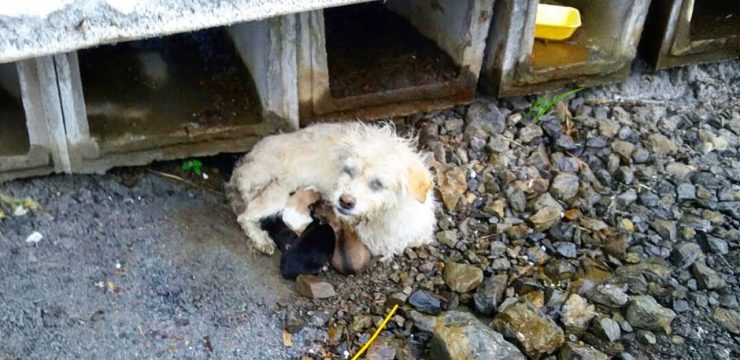
There are stories that stay with you long after you’ve finished reading them — not because they’re filled with action or spectacle, but because they quietly crack something open inside your chest. This is one of those stories.
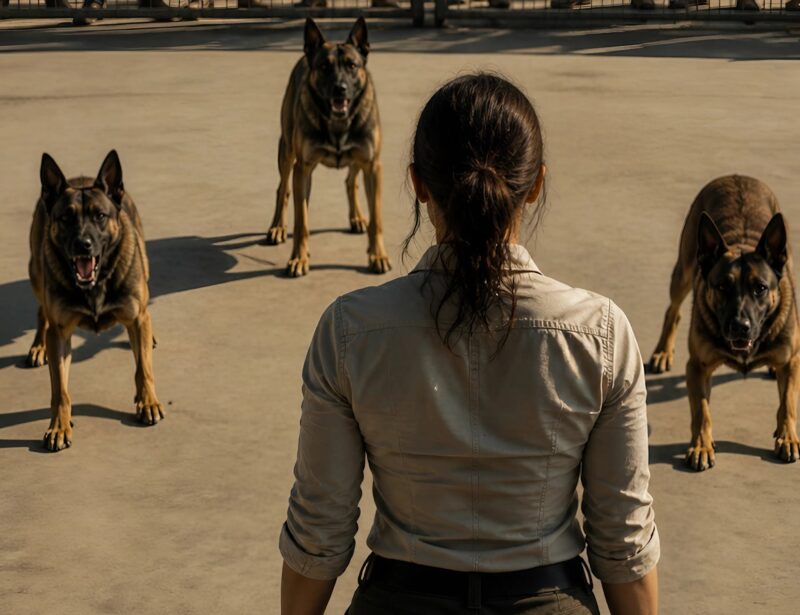
It begins, as many timeless tales do, with a young woman of extraordinary character. She was the daughter of a blacksmith, raised in a modest home where the smell of iron and honest labor filled every room. Her father had taught her the value of hard work, the dignity of earning your own way, and the unshakable importance of standing firm in who you are. She carried those lessons like armor.
Her beauty was undeniable — the kind that turns heads without trying. But what truly set her apart was something far more rare: a spirit that could not be bought. She laughed easily, spoke plainly, and held her chin up when others might have bowed. People in her community knew her not just as a lovely face, but as a young woman with a backbone made of the same steel her father hammered every day in his shop.
Word of her reputation eventually reached the wrong ears.
A powerful man — the kind whose wealth had long since convinced him that everything in this world had a price — became obsessed with her. He was the sort of figure who operated in shadows, who surrounded himself with loyalty purchased through fear, and who had never in his adult life heard the word “no” and accepted it gracefully. He sent gifts. Expensive ones. Jewelry, fine clothes, promises wrapped in gold ribbon. She returned every single item without a note.
He sent messengers with even grander offers. She turned them away at the door.
This was not something a man like him was accustomed to. And in his world, when persuasion failed, intimidation was always the next tool on the shelf.
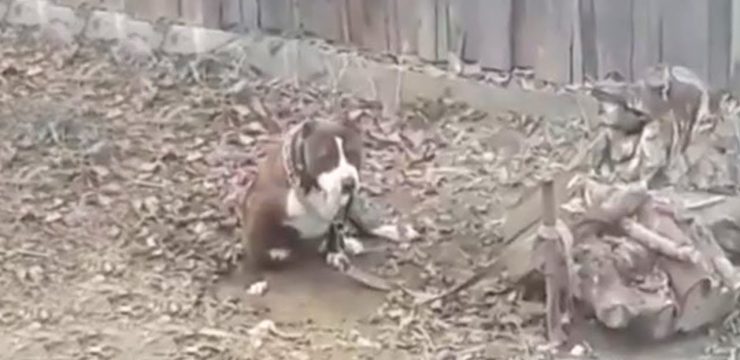
He had his people take her by force and bring her to a property he owned on the outskirts of town — a cold, concrete facility that most people in the area had learned not to ask questions about. At the center of it was a large enclosed pen, and inside that pen were dogs. Large, powerful animals that had been kept hungry, fed only raw meat, and trained — if you could call it that — to be aggressive on command. They were not pets. They were weapons.
He stood outside the pen and told her plainly: she could choose to come with him willingly, accept his terms, and live a life of material comfort under his protection. Or she could be placed inside with the animals and face whatever followed. He said it calmly, the way men like him always do when they’ve decided the outcome in advance.
She looked at him for a long moment.
Then she told him she would rather face the dogs.
The crowd that had gathered — his associates, his guards, the hangers-on who orbit men like him out of fear or greed — went very quiet. Some, perhaps, expected her to break at the last second. Surely, they thought, no one actually chooses this.
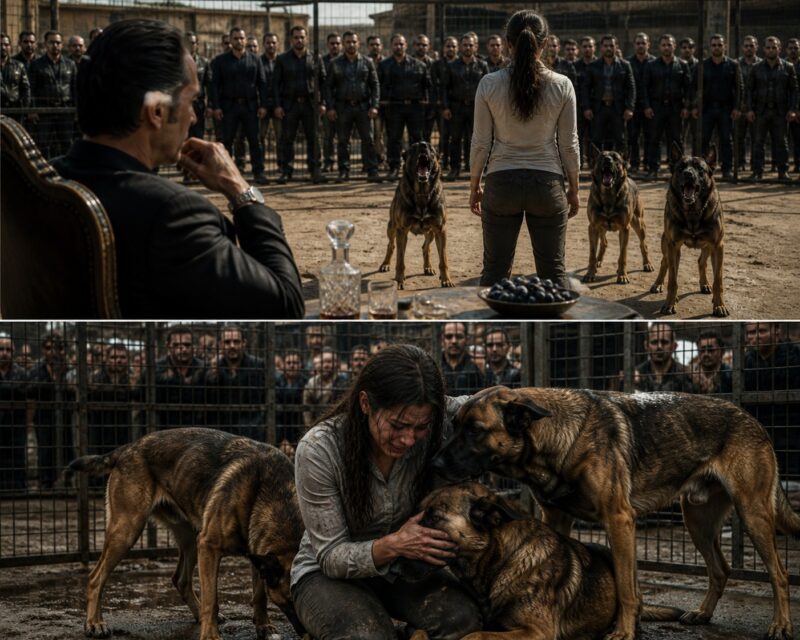
She did not break.
The gate opened. She walked in.
What happened next silenced everyone present in a way that no amount of violence ever could have.
The dogs did not attack.
They approached her slowly, cautiously, the way animals sometimes do when they sense something they cannot quite explain. One by one, they came close, sniffing her hands, pressing their heads gently against her legs. They whimpered softly — not in threat, but almost in recognition. As if something deep in their instincts understood what the humans standing outside had long since forgotten: the difference between someone worth fearing and someone worth protecting.
They circled her quietly and lay down.
She stood in the center of that pen, surrounded by animals the world had written off as dangerous, and she was perfectly still. Not frozen with fear — still with something that looked, from the outside, a great deal like peace.
The man outside the gate was furious. He shouted commands. He demanded the animals respond as they had been trained to respond.
One of the dogs rose, turned toward the gate, and growled.
Not at her. At him.
The silence that followed carried more weight than anything that could have been said aloud. His own guards shifted uncomfortably. Nobody moved toward the gate. The story goes that it was, for that man, the most profoundly humiliating moment of his life — not because he had been defied by a girl, but because he had been defied by creatures he believed he owned.
There is a truth buried in this story that has nothing to do with dogs, not really.
Animals raised in cruelty often know cruelty when they see it. They may have been shaped by harshness, but something in them still recognizes the presence of a calm and genuine soul. And sometimes, even the most mistreated creature will choose gentleness over aggression when given half a reason to.
The real danger in that pen was never the animals.
It was the man standing outside of it, convinced he had the right to decide what everything — and everyone — was worth.