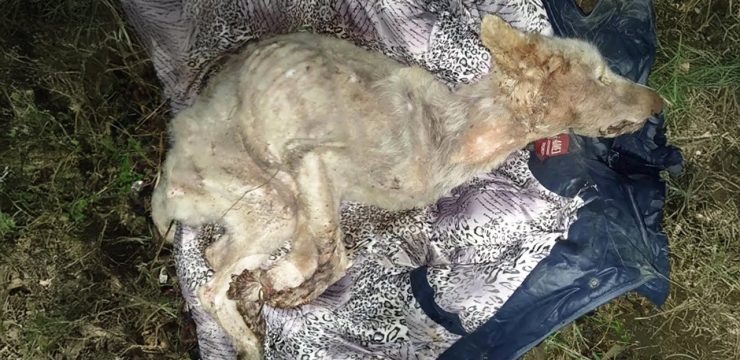
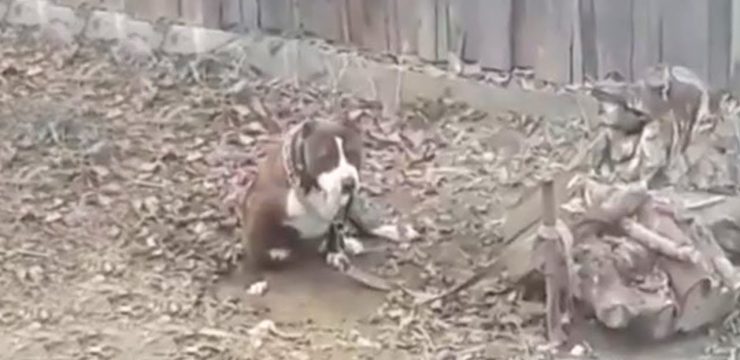
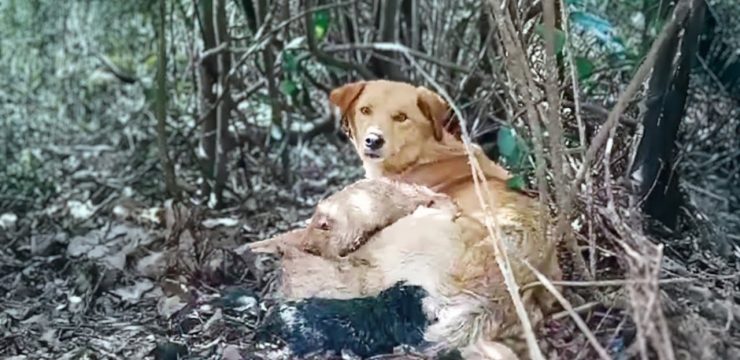
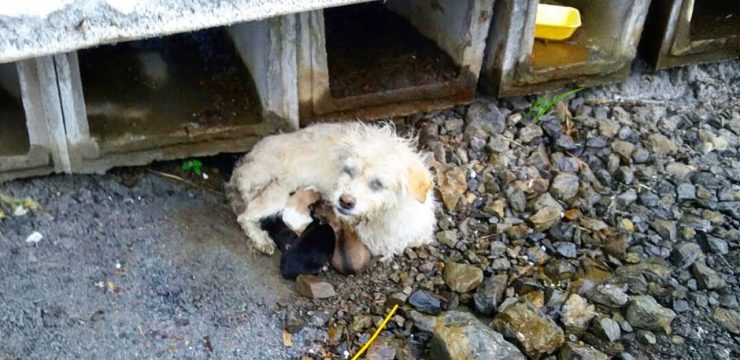
When the rescue team arrived, they weren’t sure they had found him in time. He was lying motionless on the ground, his small body ravaged by starvation and exhaustion, every breath a fragile, uncertain thing. But it was his leg that told the most devastating story — completely necrotic, darkened beyond recognition, the tissue long past saving. The veterinarian who later examined him pieced together what must have happened: his leg had been caught in a trap, and somehow, through sheer desperation and a will to survive that defied all reason, he had broken free. He had dragged himself forward until his body simply gave out, collapsing from blood loss and exhaustion somewhere no one would have thought to look.
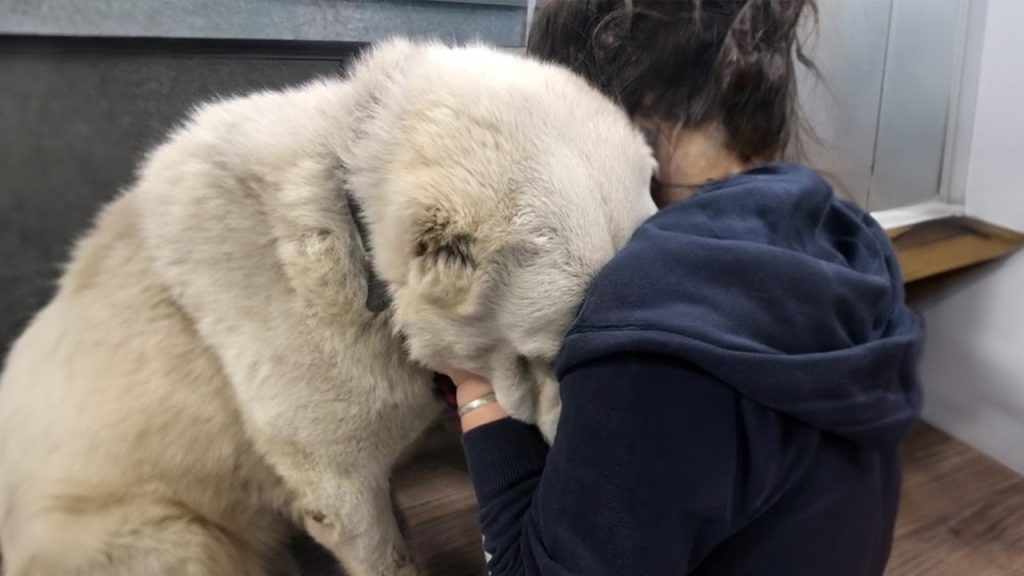
He was alive — but only just.
The rescuers didn’t hesitate. They scooped him up gently and rushed him to the clinic, understanding that every passing minute mattered. What they found when they arrived only deepened their worry. He was critically weak, dangerously anemic, and in desperate need of surgery — but his blood levels had dropped so low that operating immediately would have put his life at even greater risk. The situation felt impossibly fragile.
Then something remarkable happened.
Another dog named Tagir was brought to the clinic that day — and Tagir gave blood. One dog, already living a safe and loved life, quietly stepped in to help a stranger fighting to hold on. It was one of those moments that reminds you that compassion doesn’t belong only to humans. Thanks to Tagir’s generous donation, the surgery became possible. The rescued dog was given a name: Zangar. And for the first time since his ordeal began, Zangar had a fighting chance.
The surgery confirmed what the team had feared. His leg was beyond any hope of saving. The amputation was necessary, and the team proceeded with heavy hearts, knowing that while they were taking something from him, they were giving him something far more important — his life.
The days that followed surgery were among the hardest. Zangar was placed on high doses of antibiotics to prevent infection, but the medication left him utterly drained. For several long days, he couldn’t lift himself off the ground. He lay still, eyes distant, as though some part of him had gone somewhere unreachable. His veterinarian gave a diagnosis that broke everyone’s hearts a little more: psychological shock. What Zangar had endured — the trap, the struggle, the days of pain and fear before rescue — had left deep wounds that no surgery could touch.
But his rescuer refused to give up on him.
Every single day, they sat beside him. They spoke to him in soft voices, ran gentle hands along his back, and offered the kind of steady, patient presence that trauma survivors — human or animal — so desperately need. They gave him massages to ease the tension in his remaining muscles. They coaxed him out for short, slow walks when he was strong enough, not pushing, never rushing, simply walking beside him and letting him set the pace. It was slow, deliberate love — the kind that doesn’t make headlines but quietly changes everything.
And slowly, day by day, Zangar began to change.
The first time he stood on his own, it was a moment no one in that clinic will forget. Three legs instead of four, muscles still weak and trembling — but standing. Choosing to stand. He began to work those muscles with a determination that seemed almost intentional, as if some quiet resolve had been rekindled deep inside him. He learned to move with a new kind of grace, adapting to his body with a resilience that left the people around him in awe.
When his rescuer brought him home to foster, Zangar stepped into a household full of other dogs and didn’t miss a beat. He explored, he sniffed, he claimed his space. The other dogs welcomed him without ceremony, and within days, it was as though he had always been there. The heaviness that had settled in his eyes — that deep, hollow sadness that comes from knowing only suffering — began to lift. Slowly, then unmistakably, it was replaced by something else entirely.
Hope. Joy. Pure, uncomplicated happiness.
Today, Zangar is fully healed. He trots around on three legs with a confidence that would make anyone smile. He doesn’t carry himself like a dog who lost something — he carries himself like a dog who found everything. He leans into hugs. He follows his people from room to room. He greets every morning like it’s the best one yet. The smile that now lives permanently on his face is the kind that makes you believe, deeply and without reservation, that love is genuinely the most powerful medicine there is.
Zangar’s story isn’t just about one dog’s survival. It’s a reminder of what’s possible when someone chooses not to look away — when rescuers show up, when strangers donate what they have, when a caregiver sits patiently in the dark with someone who is hurting and simply refuses to leave.
He came into this world with no one. Now, surrounded by people who see him and love him completely, Zangar is proof that it is never too late for a new beginning.