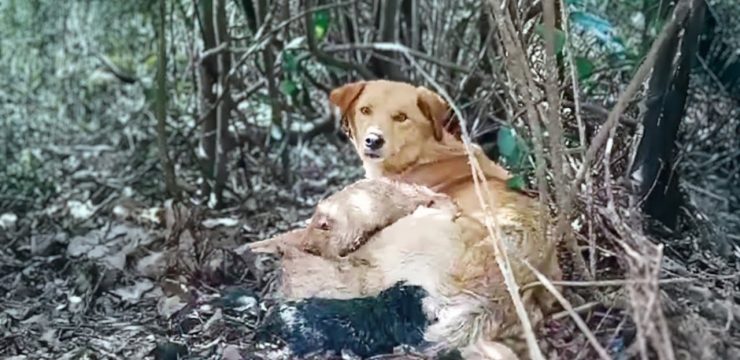
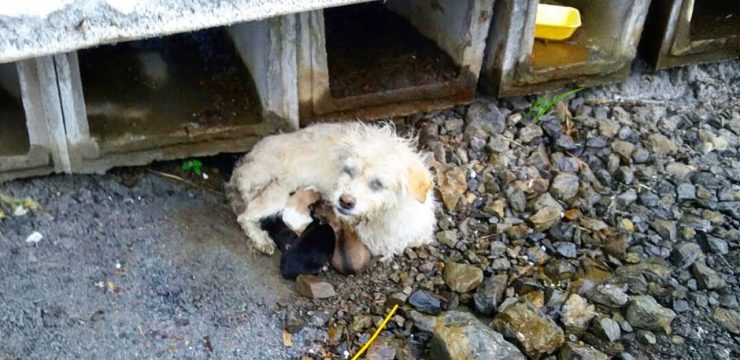
A badly injured dog came limping out of nowhere, dragging himself toward a parked car with everything he had left. His hind leg hung useless at his side. His eyes — wet, exhausted, desperate — looked up at the person behind the wheel as if he had made a decision: this was his one chance, and he was taking it.
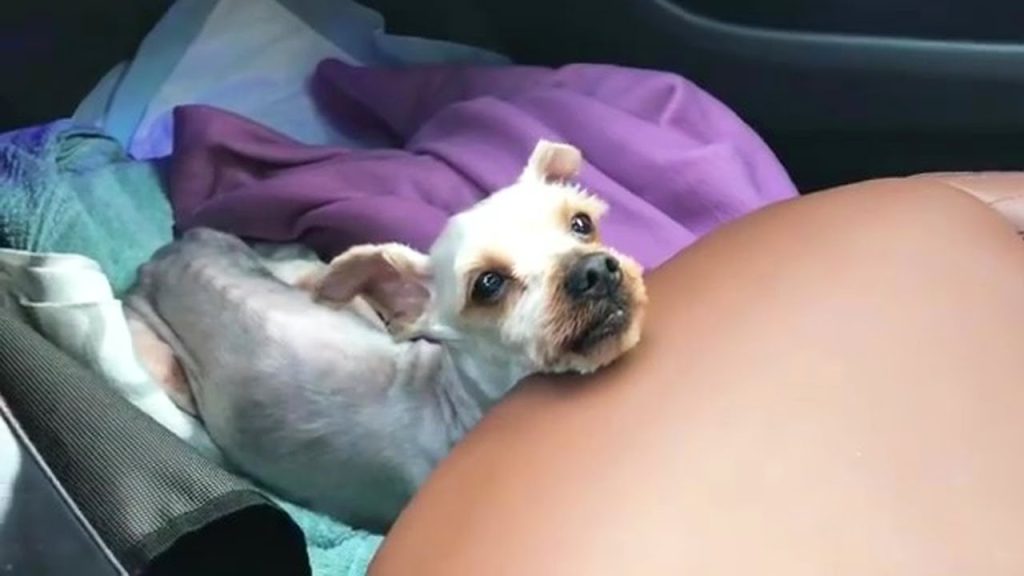
He didn’t bark. He didn’t run. He simply looked up and waited, as if he already knew that begging without words was the only language he had left.
The rescuer didn’t hesitate. One look at those eyes, and the decision was made. The dog — later named Gosha — was gently lifted into the car and rushed to receive the care he so urgently needed. Nobody knew yet how serious his injuries were, or how long the road ahead would be. What they did know was that this dog had chosen to trust a stranger with his life, and that trust was not going to be broken.
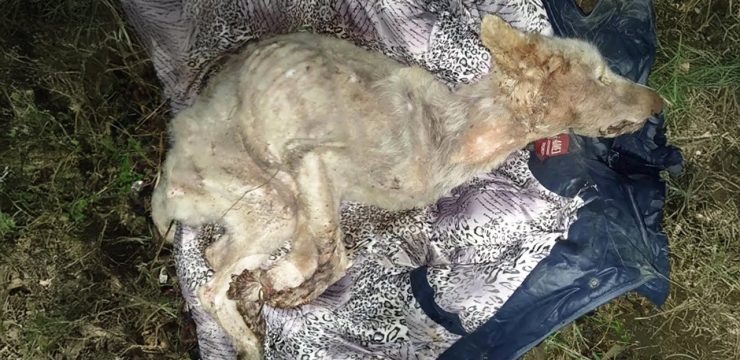
When the full picture of Gosha’s condition became clear, it was sobering. His hind leg had sustained a severe injury — the kind that changes everything about how a living creature moves through the world. The pain was significant enough that Gosha had taught himself, out of pure survival instinct, to avoid putting any weight on it at all.
He compensated by shifting everything forward. His front legs carried the entire burden of his small, fragile body. He moved carefully, deliberately, his rear end held low and awkward, his injured leg lifted just enough to keep it from touching the ground. Every single step was a negotiation between the will to keep moving and the reality of what his body was going through.
To watch him move was to understand, in a very quiet way, what resilience actually looks like. It isn’t graceful. It isn’t painless. It’s just the refusal to stop.
What followed was a recovery that unfolded one careful day at a time. Gosha’s caretakers were with him through every step of it — not just in a medical sense, but in the deeper, more personal sense of simply showing up. They sat with him. They spoke to him softly. They cheered him on in the way you cheer on someone you love, with the kind of encouragement that doesn’t require results, only presence.
Slowly, something began to shift.
It wasn’t dramatic. There was no single breakthrough moment where everything suddenly changed. Instead, it was a series of small, quiet victories — each one building on the last. Gosha began to lower his injured leg a little more each day. Then a little more. And then one day, with his caretakers holding their breath and whispering encouragement, he placed it gently on the ground and let it hold just a little of his weight.
That moment — small as it may sound — was everything.
For a dog who had spent so long protecting that leg, trusting it again required a kind of courage that most of us will never fully understand. He had learned, through pain, that the leg meant suffering. Relearning that it could also mean strength took patience, time, and the steady reassurance of people who believed in him even when he wasn’t sure he believed in himself.
The milestones kept coming. Step by step, Gosha moved from barely functional to something approaching whole. He began to navigate his surroundings with a new kind of confidence — still careful, still deliberate, but no longer broken. His eyes, which had once held only fear and exhaustion, began to carry something different. Something that looked remarkably like hope.
There is a particular kind of love that animal rescue brings out in people — the kind that doesn’t ask for anything in return, that gives simply because giving is the right thing to do. Gosha’s story is a testament to that love. It is also a testament to what animals are capable of when someone chooses to see them — truly see them — and decides they are worth saving.
He came to that car with nothing. No home, no name, no certainty that help would come. He left it with all three.
What Gosha’s journey reminds us, in the gentlest and most powerful way, is that survival is rarely a solo act. It takes a hand extended at the right moment. It takes patience that doesn’t waver. It takes the willingness to sit beside something fragile and broken and say, without words: I’m not going anywhere. You are going to be okay.
Gosha made it. Not because recovery was easy, and not because the road was short. He made it because someone stopped, looked into his eyes, and chose to stay.
That choice made all the difference.