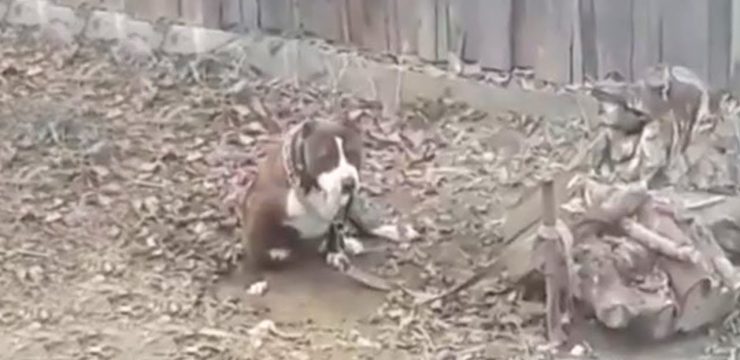
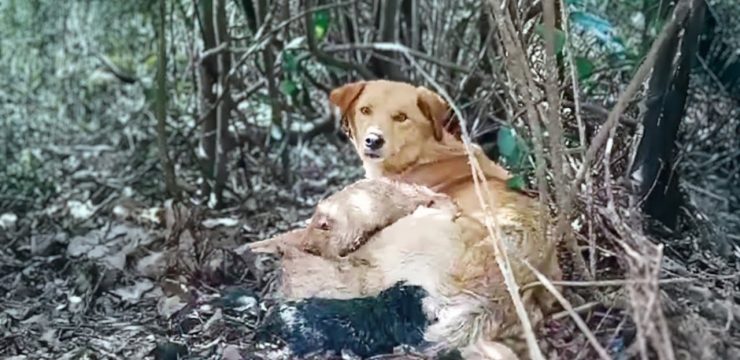
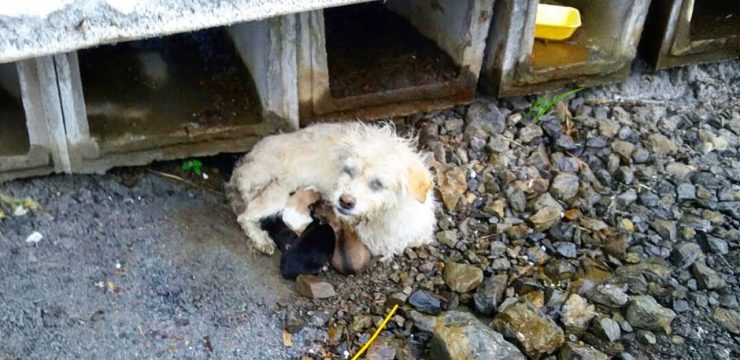
It was a bitterly cold morning when a call came in to a local dog rescue. A concerned man had discovered a dog left tied outside an abandoned factory, lying completely still in the freezing dirt. From a distance, the man couldn’t tell if the dog was even alive—but something in the stillness was too heartbreaking to ignore. He made the call, not knowing if help would come in time.
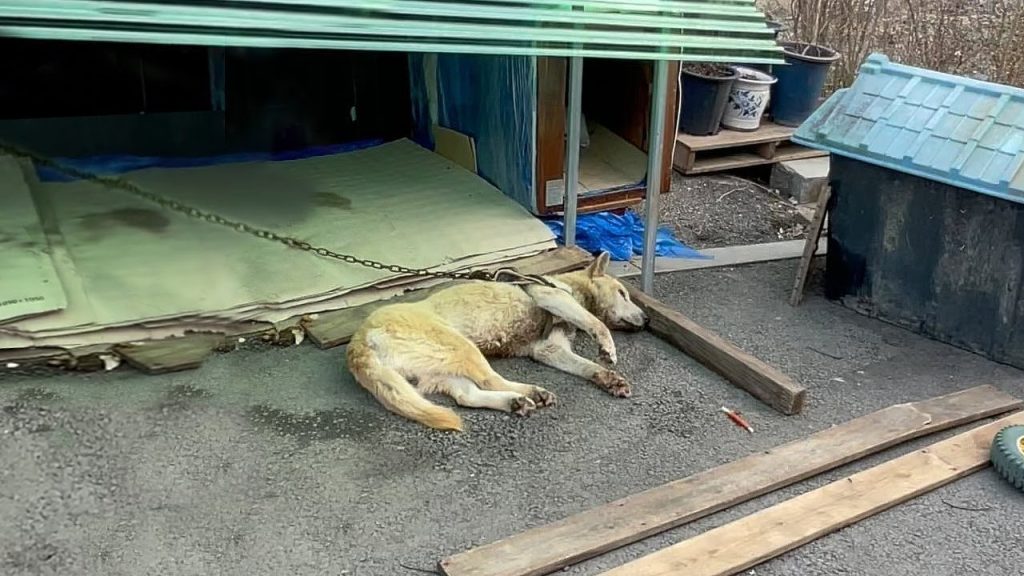
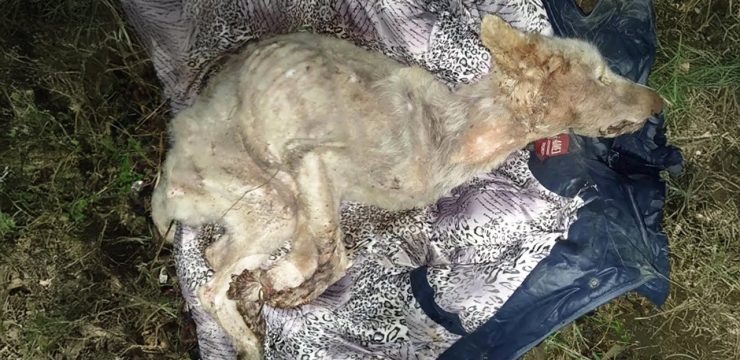
The rescue team responded immediately. When they arrived, the scene was even more tragic than they’d imagined. The dog—a senior with matted fur and eyes clouded over with age—lay motionless, unable to lift his head or shift his body. His limbs were stiff, his coat dirty and patchy, and his breathing was shallow. Without hesitation, the team gently wrapped him in a blanket and rushed him to the clinic, hoping they weren’t already too late.
At the clinic, the staff worked quickly. They named him Lucky, but his condition was anything but. Years of neglect had left his body frail and broken. The tests revealed the painful truth: Lucky suffered from deep, infected bedsores—wounds likely caused by spending years lying on hard surfaces without being able to move. His eyes, clouded with advanced cataracts, had nearly lost all vision. Worst of all, he had a serious Stage 3 heartworm infection, a dangerous and life-threatening condition that had gone untreated for far too long.
As the rescue team dug deeper, they learned from a neighbor that Lucky had been chained up outside that factory for the last three years—often left without food or water for days. Before that, he had lived his entire life in confinement, reportedly 14 years of isolation. No walks. No love. No comfort. Just a life spent waiting, alone.
The volunteers were heartbroken. How could anyone leave a living being to suffer like that? But they knew their anger wouldn’t help Lucky now. What he needed was love, care, and the chance to know peace—even if only for a little while. Given his age and condition, full recovery was unlikely. His spine had deteriorated from years of immobility. The damage was done.
But giving up was not an option.
They made a decision—not to fight for a miracle cure, but to give Lucky a life worth living, however long it might last. The team shifted their focus to palliative care. They wanted Lucky’s remaining time to be warm, safe, and filled with kindness—something he had been denied for far too long.
As part of his treatment, they tried acupuncture, hoping it might help ease the pain in his spine and stimulate parts of his nervous system that were still responsive. They also gave him nutritious, soft meals, carefully monitoring his ability to eat and digest. Volunteers sat beside him, speaking to him in gentle tones, offering comfort through quiet presence and touch.
The road was not easy. Lucky’s eyes remained distant at first, as if unsure whether he could trust the kindness he was being shown. But slowly, almost imperceptibly, his spirit began to return.
After several sessions, the acupuncture showed promising results. The swelling in his spine reduced slightly, allowing him to feel a bit more sensation in his limbs. With this progress, the team fitted him with a custom-made walking aid. It was a supportive harness that helped lift some of his weight so he could practice moving again.
The first few steps were shaky. Lucky stumbled, unsure of how to use his legs again. But he kept trying. And the team kept cheering him on. Every step, every tiny movement, was met with encouragement and praise. Little by little, Lucky learned to walk again—not with speed or grace, but with heart. He moved with determination, as if discovering a reason to live all over again.
Before long, Lucky was exploring the clinic hallways. His tail wagged gently. He started barking—tentatively at first, then with growing confidence. He was reclaiming his voice, his body, and his joy.
What was once a still, silent creature now barked with excitement when visitors came by. He sniffed around corners, greeted volunteers, and found sunny spots to nap in. One volunteer described his bark as “the sound of a soul waking up.”
Lucky’s transformation wasn’t just physical—it was emotional. He had gone from invisible to beloved. From forgotten to cherished. The love he received helped him heal in ways that medicine alone never could.
Though Lucky’s future remained uncertain, one thing was clear: the past no longer defined him. He had people who saw him, who showed up for him, and who reminded him daily that he mattered.
This story isn’t just about Lucky. It’s about every senior dog who has been cast aside when their body grows weak. It’s about every animal who waits in silence, hoping someone will notice. And it’s a reminder that even in the darkest places, healing is possible when love is present.
Lucky may have spent most of his life in chains, but in the time he had left, he learned what it meant to be free. Free to move. Free to trust. Free to feel joy. His life may have started in pain, but it was not where it ended.
The team that rescued him continues to share his journey, not just to celebrate his progress—but to inspire others to look closer. To notice the dogs who are overlooked, the ones who don’t bark for attention, who’ve learned to suffer in silence.
Lucky’s story is proof that second chances matter. That no dog is ever too old, too broken, or too far gone to deserve love. And that sometimes, healing doesn’t look like running through fields—it looks like one slow step, one quiet bark, one warm bed at a time.
If you ever come across a soul like Lucky, don’t look away. You might be the one person who helps rewrite their story. Just like Lucky, they might be waiting for someone to finally say, “You’re safe now. You’re home.”