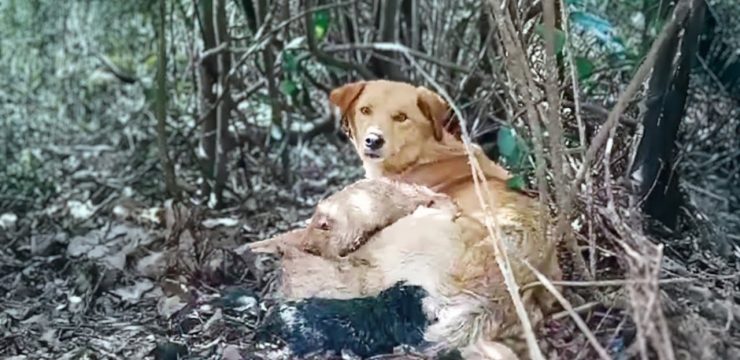
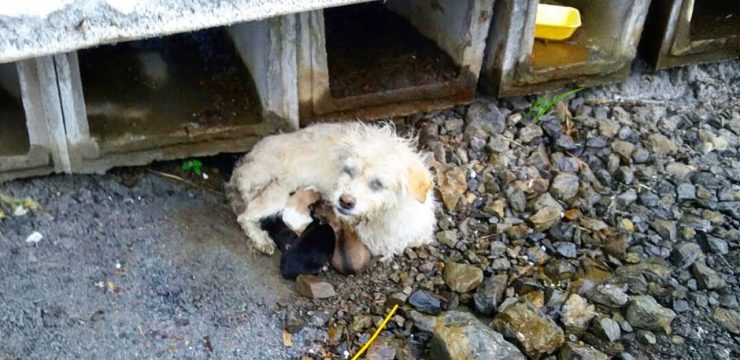
She was nothing more than a shadow when they first saw her—thin as a whisper, trembling in fear, and barely clinging to life. Her name would come later. For now, she was just another stray, another soul forgotten by the world. But this one was different. There was something in her eyes—something broken, yes—but also something desperately holding on.
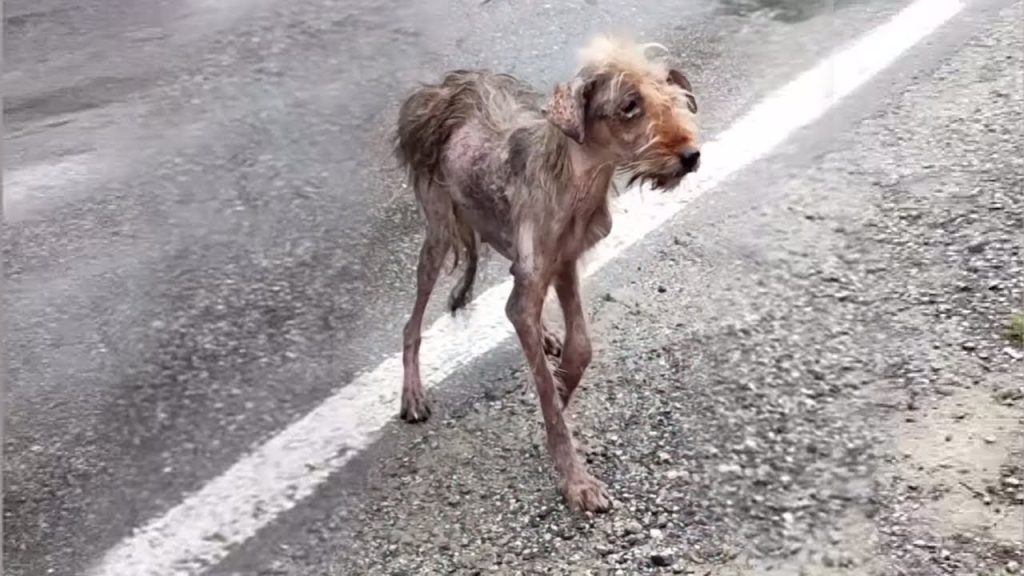
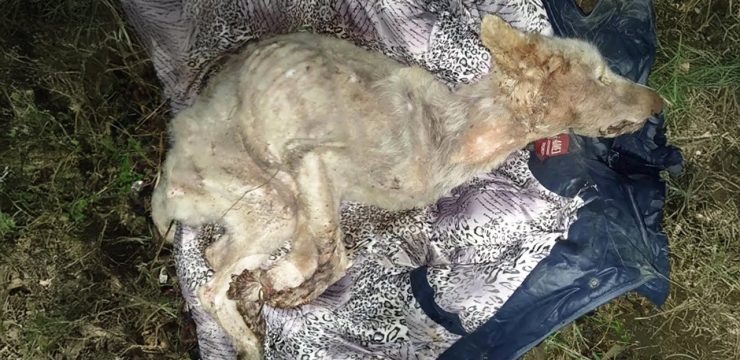
Nazlı had endured more than most could bear. When rescuers finally spotted her, she was nearly unrecognizable as a dog. Her body was skeletal, every rib visible beneath her flaky, patchy skin. Most of her fur was gone, worn away by months—maybe years—of neglect. The little that remained was tangled and matted, crusted with dirt and filth. She flinched at the slightest sound. Every human step sent her darting in the opposite direction, her instincts hardened by survival.
The rescue team knew this wouldn’t be easy. They spent several days gently following her trail, always at a distance, trying not to scare her further. Every time they got close, she bolted like the wind, heart pounding in panic. There was no trust left in her—only fear. And still, the team refused to give up.
Finally, after countless failed attempts and many sleepless nights, they managed to get close enough to gently place a protective muzzle. It wasn’t about force—it was about safety. She had been so traumatized that any contact made her lash out in self-defense. At that moment, holding her trembling body, the rescuers’ hearts broke. This wasn’t a wild animal. This was a dog—once someone’s pet perhaps—now lost in a world that had forgotten how to be kind.
At the veterinary clinic, her condition shocked even the most seasoned professionals. She was riddled with open wounds and flea infestations. Her muscles were weak, her spirit even weaker. And when they examined her further, what they found in her digestive system told a story no one wanted to hear: grass, bits of garbage, and even small stones. She had eaten whatever she could find to stay alive.
Despite her frailty, the veterinary team wasted no time. They began treatment immediately, focusing on her infected skin and slowly building up her strength. Day after day, she received gentle hands, soft voices, and a steady stream of care. She didn’t trust it at first. How could she? The world had been cruel to her for so long.
But something shifted. Slowly, as the days turned into weeks, Nazlı began to change. It started with small things. She no longer flinched when someone entered the room. She stopped growling at every approach. Her eyes softened, even if only for a moment.
And then came the breakthrough. One quiet morning, as her caregiver entered the room, Nazlı did something no one expected—she stood up and walked over. Her body, still thin and fragile, leaned gently into her caregiver’s chest. She didn’t bite. She didn’t bark. She just… leaned.
It was the first time she had ever sought love.
The room went still. It was a moment of pure emotion—raw, unscripted, unforgettable. Tears welled up in the eyes of the staff who had worked tirelessly for weeks, hoping for just this moment. Nazlı had crossed a bridge—away from fear and toward something she had never known before: trust.
From that day on, her recovery sped up. Her appetite returned. Her wounds healed. Her fur began to grow back—a soft, golden coat that shimmered in the light. Her body grew stronger, her eyes brighter. But more importantly, her soul began to mend.
Nazlı learned how to play.
She learned how to wag her tail again.
She learned that not all humans hurt. Some give treats. Some give belly rubs. Some just sit quietly and let you lean against them when the memories are too heavy.
And then came the day she had been waiting for—though she didn’t know it. A man walked into the shelter. Kind eyes. Calm voice. No rush. He knelt beside her and waited. She looked at him for a long time. Then, slowly, she stepped forward and placed her head in his lap.
That was it.
Nazlı had found her forever home.
He welcomed her with open arms and an open heart. The man knew her story. He didn’t ask for a perfect dog. He didn’t care about her scars—physical or emotional. He only cared that she had survived, and he wanted to make sure she never had to suffer again.
In his home, Nazlı blossomed. She explored the backyard, napped in warm sunlight, and curled up on the couch in the evenings. She had toys now—real ones, not sticks or stones. She had a soft bed. But most of all, she had peace.
Her journey is more than just a rescue tale. It’s a powerful reminder that every life, no matter how broken, has value. Nazlı’s transformation—from a starving stray hiding in shadows to a joyful, beloved companion—shows us what patience, compassion, and love can truly do.
Today, Nazlı is unrecognizable from the dog she once was. The fear is gone from her eyes, replaced by trust. Her thin frame is now strong and full of energy. And the girl who once ran from love now runs toward it.
This story doesn’t ask us to pity her. It asks us to believe. To believe that healing is possible. That second chances are real. That even the most wounded hearts can learn to love again, if given the chance.