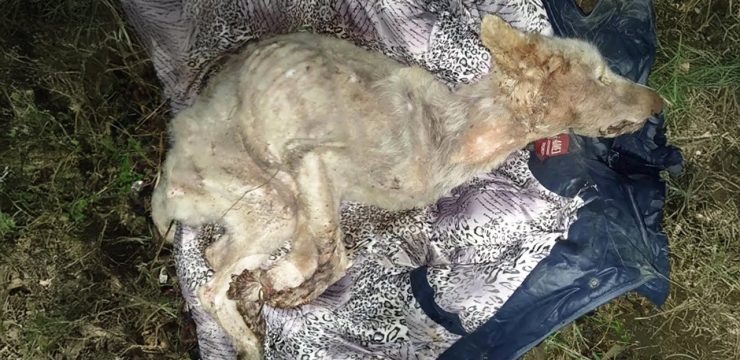
It was a quiet afternoon when we first met him—a small, frail creature lying under the sun, motionless except for the faint rise and fall of his chest. His fur, once golden and full of life, had thinned to patches. His ribs pressed sharply against his skin, and his eyes, dim yet deep, told a story too heavy for words. His name was Palito.
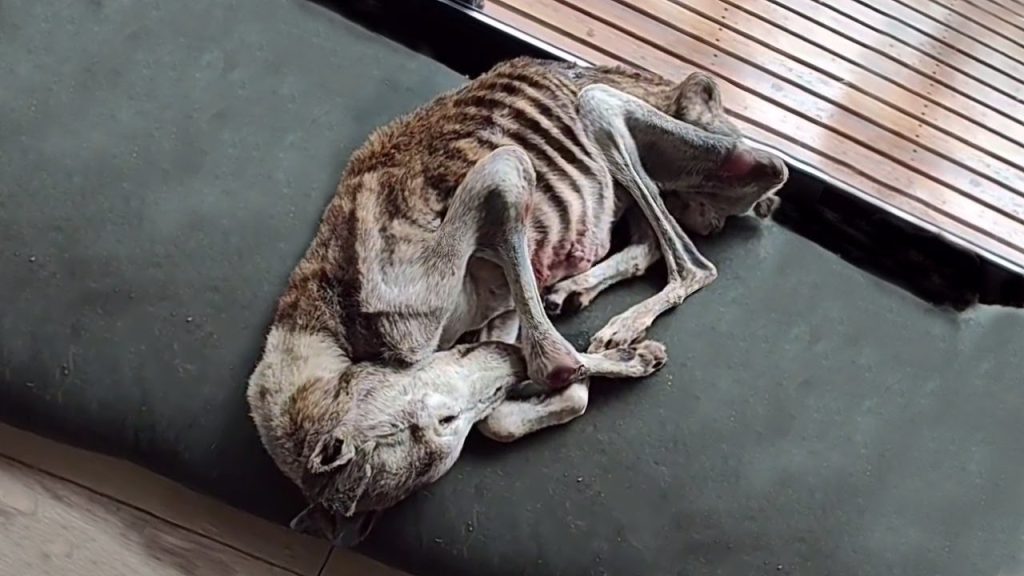
Once, he had been part of a family—a faithful companion who followed his people everywhere. But time had changed everything. One day, they packed their belongings and rode away, leaving him behind. The seasons passed, the sun rose and fell many times, but no one came back for him. Abandoned and alone, Palito wandered through dusty roads and empty fields, searching for the familiar scent of home. Hunger gnawed at his body, and loneliness hollowed out his spirit. Yet he kept walking, believing that one day someone might remember him.
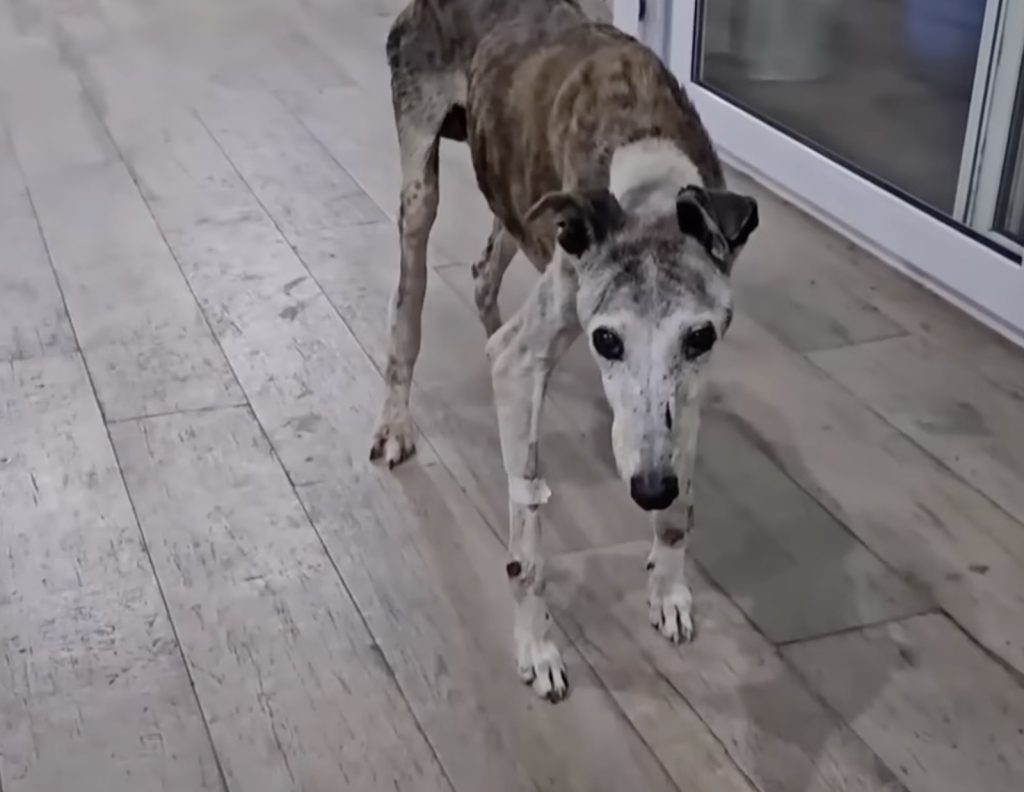
When we found him, he looked like a shadow of his former self. He had no teeth left, and his tail had long disappeared—perhaps lost in some cruel accident of survival. His skin was marked with scars, tiny wounds, and insect bites that spoke of long days without shelter. It was hard to imagine how much suffering he had endured. His body trembled with weakness, and his breathing was shallow. Still, his eyes held a spark—a quiet, unspoken plea not to be forgotten again.
The veterinarians who examined him were silent at first. Their machines revealed small metal fragments near his heart—old bullet wounds from his younger days, remnants of human cruelty. His blood showed signs of infection, and his stomach was painfully empty. He weighed barely ten kilograms, a fragile shell of what he once was. And yet, beneath the frailty, there was still life—faint, flickering, but alive.
We carried him home carefully, wrapping him in a soft blanket. He didn’t resist; he simply rested his head in our hands as if he already knew he was safe. That night, for the first time in what must have been years, Palito slept without fear. We set up a small bed for him near the window where the morning light could touch his face. He could not stand on his own, so we lifted him gently, helped him drink, and cleaned him when his body failed him. Each act of care was a promise—that he would never again face the world alone.
The following days were filled with quiet work and patience. The healers prescribed medicines for his infected blood and treated the swelling in his legs. We fed him small meals, one spoonful at a time, coaxing him to eat. Sometimes he refused, too tired to move. Other times, he would lick our hands as if to say thank you. His spirit was fragile, but his will to live was still there, hidden under layers of pain and memory.
Slowly, something began to change. A week passed, and the dullness in his eyes softened. He began to recognize our voices and wag what remained of his tail. Two weeks later, a miracle happened—he stood up. It wasn’t graceful or steady, but it was real. Palito took his first steps, shaky but determined, moving across the room as we watched with tears in our eyes. Each step was a small victory against the loneliness that had nearly taken him.
Every day after that, he grew stronger. His legs carried him a little farther. His fur began to shine again. When he looked at us now, there was warmth and trust instead of fear. He loved to sit by the window, watching the birds, his gaze calm and peaceful. Sometimes, when we walked outside together, he would stop and look up as if remembering the long road behind him—and how far he had come.
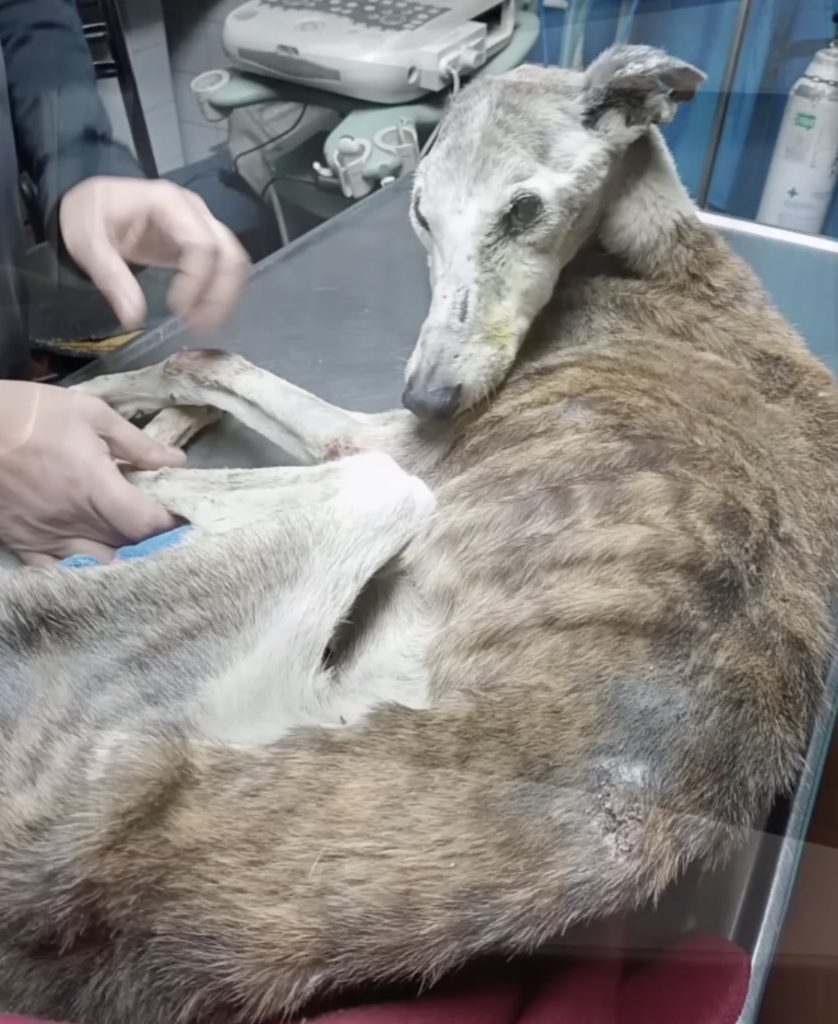
It was clear that Palito’s recovery was not just of the body, but of the soul. He had learned that love could return even after years of loss. He had found a new family, one that saw him not as a broken animal, but as a survivor—a brave little warrior who refused to give up. We often whispered to him, “You’re safe now. You’re home.” And every time, he would lean against us, closing his eyes as if to say, “I know.”
There were still difficult moments. Some nights he whimpered in his sleep, haunted by old memories. On those nights, we sat beside him and spoke softly until he drifted back into peace. His healing was slow, but his heart was learning to trust again. The same dog who once lay forgotten under the sun now greeted each morning with gentle excitement, ready for a new day.
Looking at him, I often thought about how fate had brought us together. Maybe it was divine guidance, or maybe it was simply compassion leading one heart to another. Whatever it was, it felt like more than coincidence. Saving Palito wasn’t just about rescuing a dog—it was about restoring hope. In his eyes, we saw the reflection of every soul that has ever been left behind and every act of kindness that can bring them back to life.
Palito’s story is one of quiet courage. He taught us that even in the smallest body can dwell a mighty spirit. He showed us that with care, patience, and love, even the most broken heart can beat strong again.
Today, when he walks beside us, head held high, we no longer see a creature of sorrow. We see a warrior who has fought his way back to life. His journey reminds us that healing takes time, but it is always possible.
If Palito could speak, I believe he would say something simple yet powerful: “Thank you—for seeing the light within me.”
And in truth, we are the ones who should be grateful—to this small, gentle soul who reminded us that compassion can transform pain into peace, and that no being, no matter how forgotten, is ever truly beyond saving.