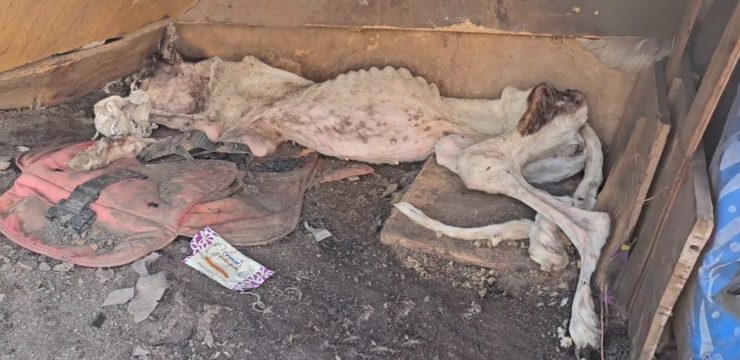
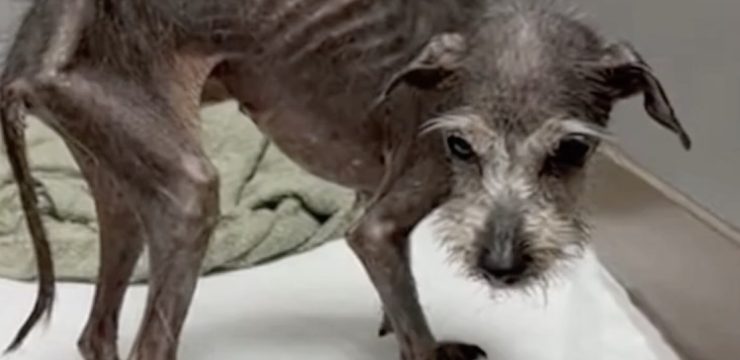
Nazli’s story begins in a place most of us would rather not imagine—a life lived entirely in the shadows, shaped by neglect, fear, and constant uncertainty. For years, she survived on the outskirts of human society, unseen and unwanted, her world defined not by comfort but by survival. When rescuers first caught sight of her, what they saw was not just a stray dog. They saw a fragile, skeletal figure hiding among piles of trash, her body trembling, her eyes wide with distrust. She had learned that people brought danger, not safety, and every instinct in her told her to run.
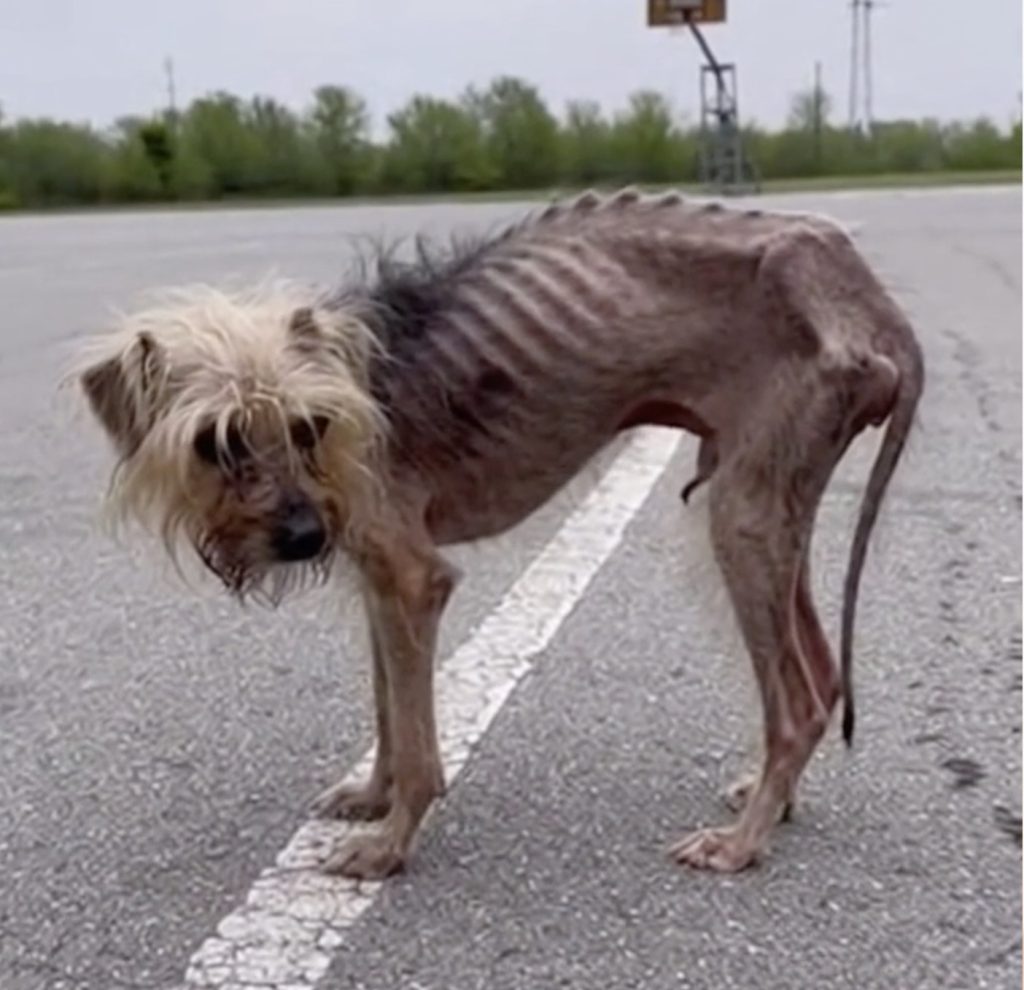
She did exactly that. Any attempt to approach her sent her fleeing in panic. Her thin frame darted away at the slightest movement, as though the very presence of a human hand meant harm. It was clear she had endured more than simple hunger. This was the posture of a soul deeply wounded. Her fear was not momentary; it was ingrained, etched into her muscles and her memory.
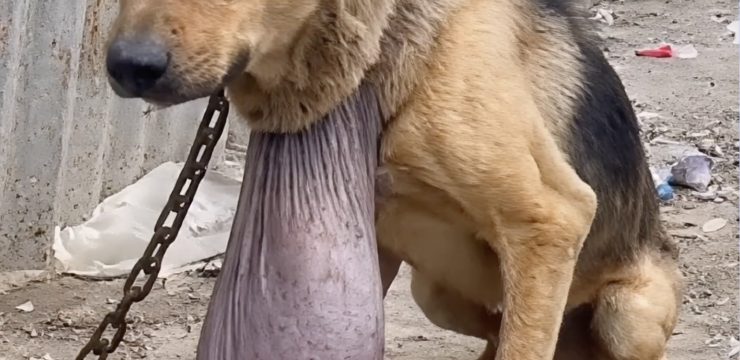
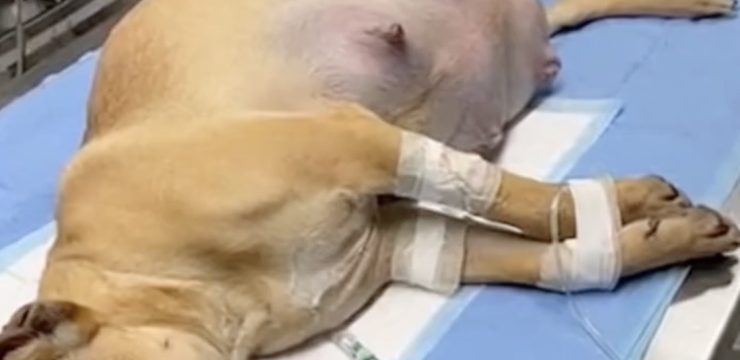
When rescuers finally managed to bring her into care, the extent of her suffering became painfully clear. A medical examination revealed that her stomach contained rocks, grass, and bits of debris—desperate attempts to quiet the gnawing pain of starvation. She had been so deprived of nourishment that she resorted to swallowing whatever she could find. It was a heartbreaking confirmation of just how long she had been left to fend for herself, alone and forgotten.
Her recovery would not be simple. Physical healing was only the beginning. She required treatment for severe malnutrition and other medical complications caused by prolonged neglect. At one point, she underwent a significant surgical procedure to address internal damage. The veterinary team worked with careful precision, determined to give her body the chance it had been denied for so long. Every small improvement—a stabilized heartbeat, a steadier breath—felt like a quiet victory.
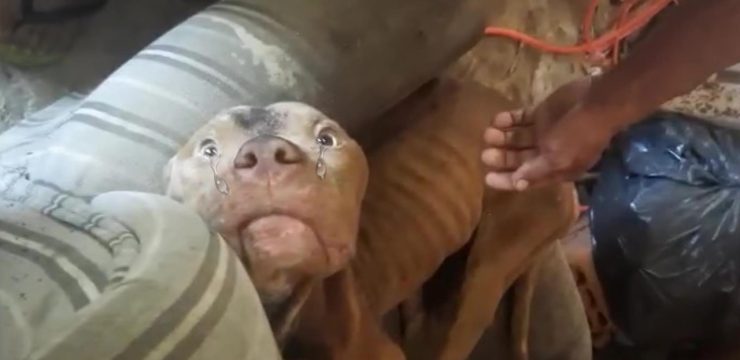
Yet those who cared for Nazli understood that medicine alone would not be enough. Her body had been starved, but her spirit had been fractured. In the early days of her rescue, she responded to human touch with aggression and defensiveness. It was not cruelty; it was self-protection. When trust has been broken repeatedly, survival demands distance. She growled, flinched, and held herself rigid, as though bracing for the worst.
Patience became the cornerstone of her rehabilitation. Her caregiver approached her gently, never forcing contact, never demanding affection. Instead, they offered consistency. Soft voices. Slow movements. A quiet presence that did not threaten. Day after day, they sat near her, allowing her to observe without pressure. They respected her boundaries, understanding that trust must be invited, not taken.
Gradually, almost imperceptibly at first, something shifted. The tension in her body eased. Her eyes, once darting with suspicion, began to soften. She no longer recoiled at every movement. The breakthrough came in a moment so simple it might have been overlooked by an untrained eye. Nazli, once fiercely defensive, chose to rest her head in her caregiver’s hand. It was not dramatic. There were no grand gestures. But for a dog who had lived in terror, it was monumental. It was the first silent declaration that she was willing to believe in kindness.
From that point forward, progress continued steadily. She began eating proper meals, her body slowly rebuilding strength. Her coat, once dull and thin, started to regain its texture. Healthy weight returned to her frame. Walks became less fearful. She started exploring her surroundings with curiosity instead of panic. Each small step represented months of quiet resilience.
What makes Nazli’s story especially powerful is that her transformation was not rushed. There was no instant miracle. There were setbacks, cautious days, and moments when old fears resurfaced. But love remained consistent. Care remained steady. And slowly, the frightened stray who had hidden among garbage began to reveal her true personality.
Then came a turning point that felt almost like something from a storybook. A kind man met Nazli and saw beyond her scars. He did not focus on her past or the physical reminders of hardship she carried. He saw the gentleness emerging beneath the surface, the quiet loyalty in her gaze. Where others might have seen damage, he saw potential. Where others might have hesitated, he offered commitment.
He chose to give her a permanent home.
For Nazli, this was more than adoption. It was the first time in her life that she belonged to someone who wanted her. A safe bed replaced cold ground. Regular meals replaced hunger. Most importantly, affection replaced fear. In her new home, she was not merely tolerated—she was cherished.
Today, she is nearly unrecognizable from the trembling dog who once hid from every outstretched hand. Her eyes are bright. Her body is strong. She moves with confidence instead of caution. She spends her days playing joyfully with her new canine sibling, running freely in a space that is hers. Laughter and companionship have taken the place of isolation.
Nazli’s journey stands as a powerful reminder, especially for those of us who have lived long enough to understand hardship, that healing is rarely immediate but always possible. Wounds—whether physical or emotional—do not disappear overnight. They require time, patience, and consistent compassion. But when those elements are present, transformation can occur in ways that feel almost miraculous.
Her story invites us to look beyond first impressions. It challenges us to see value where others may see damage. It affirms that kindness is not a small act; it is a force capable of rebuilding what has been broken. Nazli did not simply survive. She was given the chance to begin again.
And in that new beginning, she reminds us that even the deepest fear can be replaced with trust, and even the most fragile life can flourish when surrounded by love.